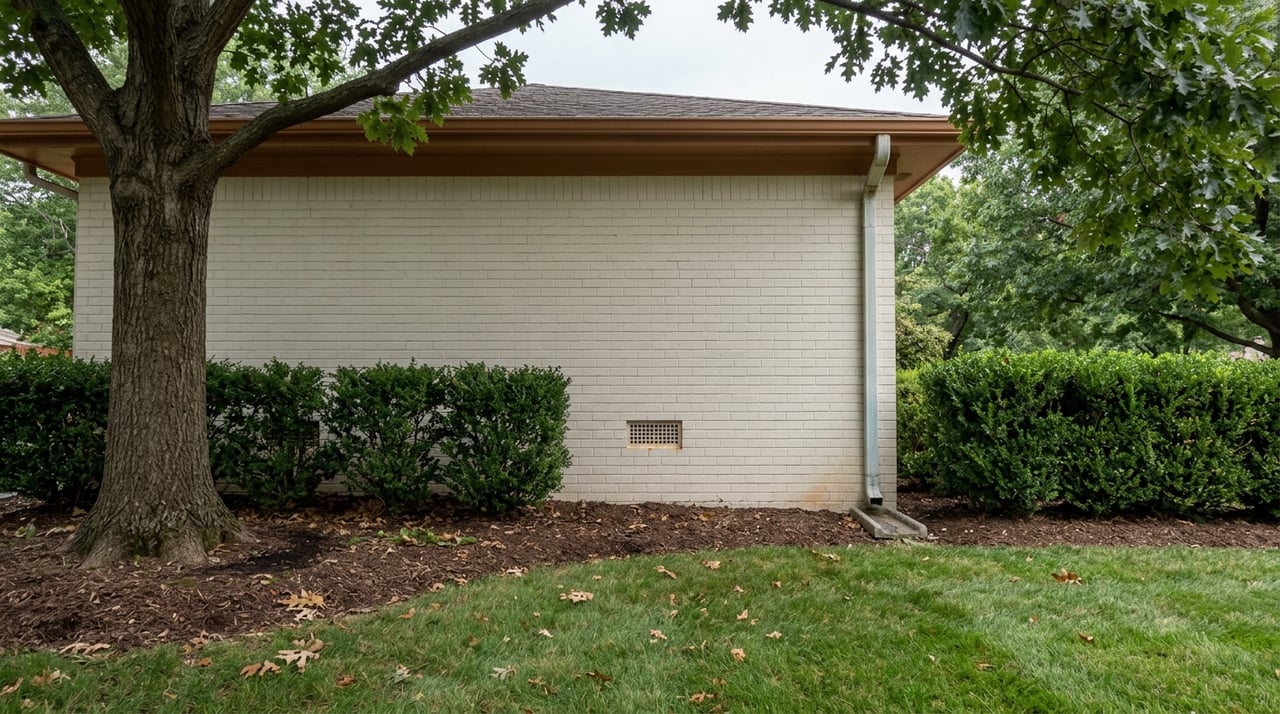
The Invisible Line That Splits Due Diligence in Matthews, NC
September 17, 2026
September 17, 2026
A buyer goes under contract on an older home near downtown Matthews. The due diligence period is set at fourteen days, the fee is already wired to the seller, and the general inspection is scheduled for day three. The report comes back clean on the roof, the HVAC, the electrical panel. Nobody mentions the sewer line. Nobody mentions whether the house is even on public sewer at all. By the time someone asks, six of the fourteen days are gone and the answer determines which county's health department needs to get involved.
That is the actual shape of due diligence in Matthews, and it looks nothing like the generic version most guides describe. North Carolina's due diligence system is unusual on its own. But Matthews adds a wrinkle that a statewide explainer will never mention: the town sits across a county line, and that line quietly decides what your inspection list should include.
The North Carolina Real Estate Commission describes the due diligence period as the buyer's negotiated window to investigate the property and the transaction, and confirms that a buyer who terminates during that window typically gets earnest money back but not the due diligence fee, unless the contract says otherwise.
That structure means the fee is gone the moment the ink dries. The only leverage a buyer has left is time, and in Matthews, time is exactly what a handful of local, hard-to-Google facts tend to eat.
Matthews sits on the Mecklenburg and Union County border. Most homes in the central part of town connect to public sewer, but a meaningful number of outlying properties, particularly on larger lots near Stallings, Mint Hill, and the county line, still run on private septic systems. Which side of that line a house falls on changes two things at once: which utility serves the home, and which county's environmental health office holds the permit history a buyer's agent needs to pull.
If the home is on Mecklenburg County's side, that history sits with Mecklenburg County Public Health. Cross into the Union County portion of town and it is Union County Environmental Health instead. Neither office shows up on a listing sheet, and neither shows up in a portal search. A buyer who assumes every Matthews home is on the same utility system can lose days figuring out which office to even call before the due diligence clock forces a decision.
A general home inspection covers the roof, structure, HVAC, electrical, and plumbing fixtures. It does not, by default, include a camera run through the main sewer line. That is a separate service, and in a town built up across several decades of Piedmont clay, skipping it is the most common expensive miss in a Matthews transaction.
Local inspectors who perform sewer scopes in Matthews point to three recurring causes of failure, and all three are tied to the town's geography rather than to any single builder or era:
A sewer scope typically takes sixty to ninety minutes and can be added onto a general inspection or scheduled on its own. For a buyer closing on a pre-1970 home in one of Matthews' older sections, that hour is cheap insurance against a line replacement discovered after the due diligence window has already closed.
Matthews sits on dense Piedmont clay that drains slowly, and the town receives somewhere in the range of 44 to 45 inches of rain a year, noticeably above the national average. Combine that with the fact that many homes here are built on crawl spaces rather than slabs or full basements, and moisture becomes less of a maybe and more of a maintenance line item.
That reality has already worked its way into how homes are marketed locally. Recent listings for homes in Windrow Estates and Brightmoor advertise details like a new crawlspace vapor barrier and dehumidifier or an updated crawlspace as features worth calling out, right alongside a newer HVAC system or a restained deck. In a market where buyers are reading MLS descriptions closely, crawl space condition is no longer background information. It is part of the pitch.
For due diligence purposes, that cuts both ways. A seller who has already had the crawl space evaluated and addressed walks into negotiations with documentation. A buyer who skips a crawl space evaluation on an older home is choosing not to know something that local sellers are actively advertising as a selling point elsewhere in town.
None of this changes the mechanics of the contract. It changes how a buyer should spend the days they've already paid for. A due diligence period in the Charlotte area in 2026 typically runs somewhere between fourteen and twenty one days, sometimes longer on a negotiated basis, and every day that passes without an answer is a day closer to a forfeited fee.
A sequence that actually accounts for Matthews-specific risk looks like this:
The stakes are not abstract. A septic system that fails inspection after the window has closed can run anywhere from roughly $8,000 to well over $25,000 to repair or replace, according to local septic contractors who work in the Matthews area. Compare that to a septic tank pump-out and inspection, which typically runs in the $250 to $450 range, and the case for front-loading the investigation instead of waiting on it becomes straightforward.
Is a sewer scope required in Matthews, or is it optional? It is an add-on service, which is exactly why it gets skipped. On an older home in Matthews, it is worth treating as standard practice rather than an extra.
How do I find out if a specific Matthews home is on public sewer or private septic? This is a question for your agent to confirm early, ideally in the first days of due diligence, since the answer determines which county's environmental health office holds the permit records and which type of inspection actually applies.
Does North Carolina require sellers to disclose septic problems? Yes. Redline Site Services says known defects, including issues like slow drains, odors, or a known baffle problem, are required to be disclosed on the state's Residential Property Disclosure Statement.
Due diligence in Matthews rewards buyers who know the town's geography as well as they know the contract. The county line running through it, the clay under it, and the age of the pipe beneath an older home all shape what those fourteen to twenty one days actually need to accomplish. If you're weighing an older home in Matthews, or figuring out how to price and prepare one for sale, Harper Fox can walk through what your specific address is likely to turn up before the clock starts running. Let's Connect.
This article is general information, not legal, tax or financial advice. Consult a qualified professional about your situation.
Stay up to date on the latest real estate trends.



Discover more than just a home. With deep knowledge of Charlotte’s diverse neighborhoods and vibrant lifestyle, Harper helps you find a place where you can truly live, work, and play. From urban living to quiet comfort, he ensures your real estate journey is seamless, informed, and tailored to you.