
The Boundary That Splits Dilworth's Home Prices in Two
August 27, 2026
August 27, 2026
Pull up two different sources for Dilworth home prices and you'll get two different neighborhoods. In January 2026, Redfin's "Dilworth Historic District" page put the median sale at $1.1 million, up 5.7 percent from a year earlier. The same company's broader "Dilworth" page, covering what most people mean when they say the neighborhood's name out loud, had shown a median of $813,000 back in August 2025, up more than 50 percent year over year, before later reporting an average price closer to $626,000, down 16 percent. Zillow's own tally for the wider area puts this year's average home value at $764,334, up just half a percent over the past year. Narrow the sold data to single-family homes only over the past twelve months and the median jumps to $1,425,000. Ask Homes.com and the same twelve-month window shows a $600,000 median.
None of these numbers are wrong. They're measuring different things and calling them the same neighborhood.
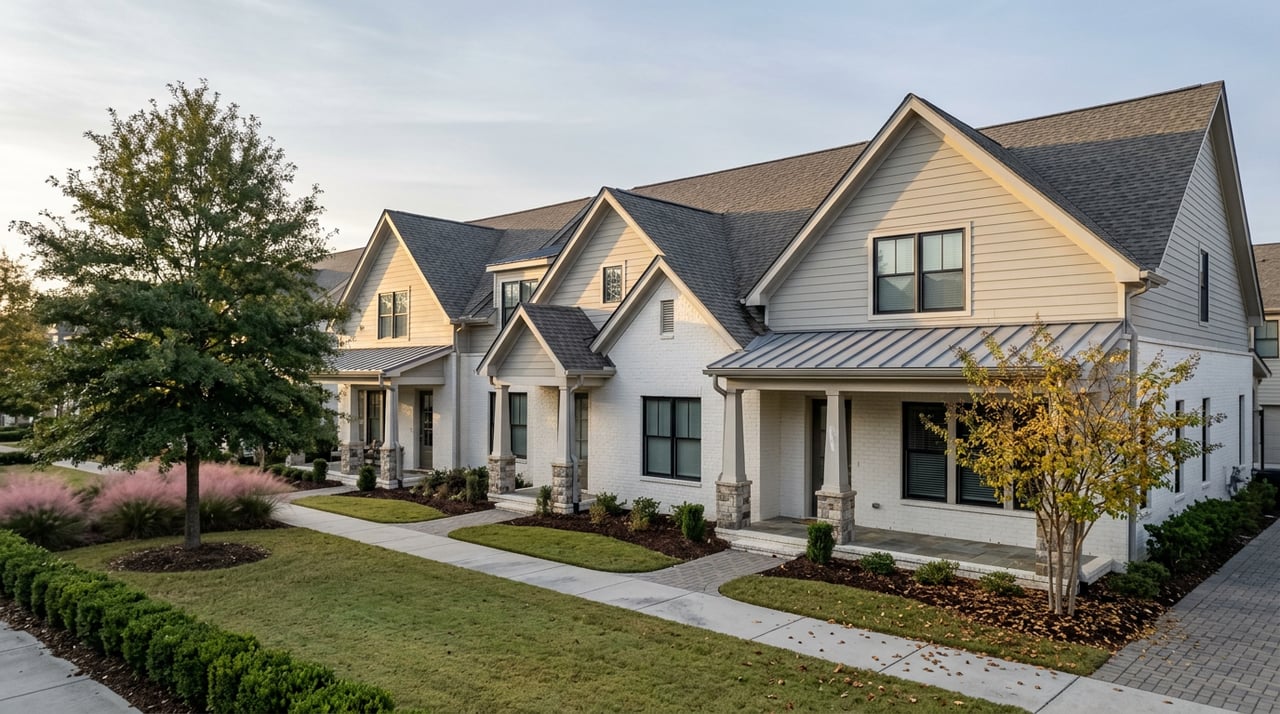
Most of the confusion traces back to a boundary that doesn't show up on a listing photo: the line between the Dilworth Local Historic District, which the city of Charlotte actually regulates, and the much larger area that everyone, including most agents, calls "Dilworth" out of habit. The City of Charlotte's boundary map shows the Local Historic District following a specific set of streets, including Charlotte Drive, Dilworth Road West and East, Camden Road, and smaller avenues like Lennox, Winthrop, Ewing, and Rensselaer. Everything inside that boundary answers to the Charlotte Historic District Commission. Plenty of homes marketed as Dilworth sit outside it entirely, closer to South Boulevard and the light rail line, in blocks with newer construction and a different pricing pattern.
That distinction matters more than most buyers realize. According to UNC Charlotte's Urban Institute, Dilworth is one of a small handful of Charlotte neighborhoods, alongside Fourth Ward, Hermitage Court, Plaza Midwood, Wesley Heights, and Wilmore, that carry Local Historic District status. Other well-known historic-feeling areas, including Myers Park and Elizabeth, only have the National Register label.
Owning inside the Local Historic District doesn't mean every project needs a hearing. Roughly two-thirds of the applications that come through the Charlotte Historic District Commission's office only need administrative approval, a staff-level sign-off that typically takes five to ten business days. Replacing a door, adding a fence, redoing a driveway, most rear-yard work: these move fast.
The other third goes in front of the full Commission, which meets once a month, and covers the bigger swings: additions, new construction, front or side porch enclosures, substitute siding, demolition. That process starts with a $540 application fee listed by the City of Charlotte, and the meeting agendas from this year point to a steady stream of real projects. The Commission's May 2026 agenda included a case at 1652 Dilworth Rd W. The July agenda took up an addition and window changes to an institutional building at 601 East Boulevard, along with a garage dormer addition at 425 Rensselaer Avenue. An April 2026 case reviewed window changes at 2126 Charlotte Drive. This isn't a dormant rule from the 1980s. It's a live queue, with new Dilworth addresses on it most months.
Demolition gets its own layer of friction. A contributing structure inside the district can be held up for as long as 365 days once a demolition application is filed, according to the Charlotte-Mecklenburg application checklist, a window meant to give the Commission and neighbors time to weigh alternatives before a house comes down.
A 2024 study covered by UNC Charlotte's Urban Institute, based on a citywide survey of historic neighborhoods, found that Dilworth's district is largely intact except for the blocks closest to the light rail line on South Boulevard, where the study noted the boundaries of the historic district have been compromised by new construction. The same survey warned that if the pace of teardowns and major additions in Dilworth kept up, the district's boundaries would likely need to shrink to reflect what's actually still there. Then-Commission administrator John Howard described the value of the designation in language reported by UNC Charlotte's Urban Institute: what you get from the local historic districts is more qualitative than quantitative, better construction quality, houses that last longer because they're maintained to a standard, and a level of architectural consistency you don't get once that oversight goes away.
Put those two facts together and the pricing confusion stops being a mystery. The Historic District Commission's boundary protects a shrinking, well-defined core of pre-1940s bungalows and Colonial Revivals where teardowns are harder to pull off and renovation has to match design standards. That's the segment pricing near $1.1 million with steadier year-over-year growth. The broader "Dilworth" label that most portals default to sweeps in everything nearby, including newer construction and infill closer to South Boulevard where the historic fabric has already given way, which is exactly the kind of inventory that can swing a monthly average by tens of thousands of dollars depending on which handful of homes closed that period.
| Inside the Local Historic District | Outside it, still marketed as "Dilworth" | |
|---|---|---|
| Who approves exterior changes | Charlotte Historic District Commission (staff or full Commission) | |
| Typical process for major work | $540 fee, monthly full-Commission meetings | |
| Demolition | Up to a 365-day stay possible for contributing structures | |
| Recent price signal | Redfin's narrower polygon: $1.1M median, January 2026, up 5.7% year over year | Broader Redfin and Zillow figures range from roughly $626K to $813K depending on month sampled |
If you're comparing two houses both labeled Dilworth, the neighborhood-level median on any portal tells you less than the specific address does. Two blocks can sit a few hundred feet apart and answer to entirely different rules. Neither position is better on its own. It depends on whether you're buying the house for what it already is or for what you plan to make it into.
Before you get attached to a listing, it's worth checking whether the address falls inside the Local Historic District boundary or just carries the neighborhood's name informally. The city's own historic district map is public, and anyone planning a renovation, a rear addition, or eventually a teardown and rebuild should check whether the address falls inside the boundary.
Does every home in Dilworth fall under Historic District Commission review? No. Only properties inside the officially mapped Local Historic District do.
What's the real difference between National Register listing and Local Historic District status? Dilworth has Local Historic District status. Neighborhoods like Myers Park and Elizabeth carry only the National Register designation.
How fast can I expect a renovation approval? Minor, mostly cosmetic projects usually clear through administrative approval in five to ten business days. Anything bigger, new construction, additions, demolition, needs a spot on the Commission's monthly agenda, and current caseloads mean those can take longer than that timeline alone suggests.
Can a historic home in Dilworth actually be torn down? Yes. Local Historic District status can delay demolition of a contributing structure for up to 365 days, but it doesn't prevent it outright. That's part of why the district's edges near the light rail corridor have already changed.
If you're weighing a Dilworth bungalow against new construction, or trying to figure out what a specific address actually allows you to do with it, that's the kind of groundwork worth doing before you write an offer, not after. Harper Fox has spent years working through exactly these boundaries block by block. Let's Connect.
This article is general information, not legal, tax or financial advice. Consult a qualified professional about your situation.
Stay up to date on the latest real estate trends.


Discover more than just a home. With deep knowledge of Charlotte’s diverse neighborhoods and vibrant lifestyle, Harper helps you find a place where you can truly live, work, and play. From urban living to quiet comfort, he ensures your real estate journey is seamless, informed, and tailored to you.