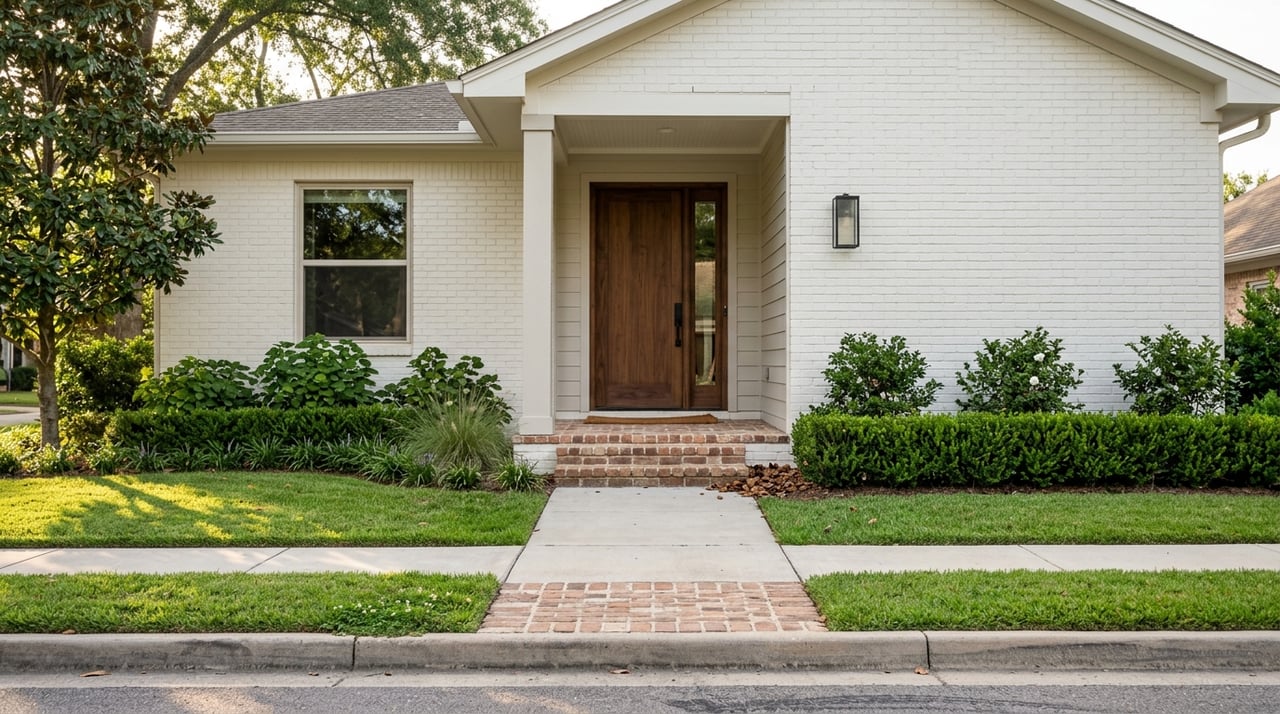
Exploring Life In Matthews Just Outside Charlotte
May 21, 2026
May 21, 2026
If you want Charlotte access without living in the middle of Charlotte, Matthews deserves a close look. For many buyers, the challenge is finding a place that feels connected and convenient while still offering everyday breathing room, local character, and a true sense of place. Matthews stands out for exactly that balance, and understanding how it lives day to day can help you decide if it fits your goals. Let’s dive in.
Matthews is a town in Mecklenburg County just outside Charlotte with a population of 32,048 across 17.12 square miles. The town describes itself as offering big-city amenities with a small-town feel, and the numbers support that in a practical way. Recent data also show a median household income of $108,611 and an average commute of 25.2 minutes.
That combination gives Matthews a distinct position in the Charlotte area. It feels local enough to have its own identity, but it is still closely tied to the larger metro for work, shopping, dining, and entertainment. If you want a suburban setting without feeling completely removed from the city, Matthews often lands in the sweet spot.
One of the biggest draws is downtown Matthews. Rather than feeling like a pass-through commercial area, it has a true town-center identity shaped by restaurants, shopping, annual festivals, nightlife, and community gathering spots. That gives the area a rhythm that goes beyond simple convenience.
The town also highlights places that help define daily life here, including the Matthews Public Library, Matthews Playhouse, McDowell Arts Center, and the Mecklenburg County Sportsplex at Matthews. These are the kinds of anchors that make a town feel lived in, not just developed. For buyers comparing suburbs, that difference matters.
History is part of the experience too. The Matthews Train Depot, built in the late 1880s, now serves as the Matthews Visitor Center on Matthews Station Street. Along with the caboose and the railroad history tied to downtown, it adds another layer of identity that helps Matthews feel established rather than newly assembled.
Matthews has the kind of local staples that shape how a place feels over time. The town points to Renfrow Hardware, a business with more than 120 years of history, as part of the downtown story. That kind of longevity says a lot about the town’s roots.
The Matthews Farmers Market is another standout. According to the town, it is the largest producer-only farmers market in the Charlotte region. For you, that means regular access to a strong local amenity that supports a more connected, everyday lifestyle.
Matthews is not just about housing and commuting. It has a strong parks-and-trails network that supports outdoor time as part of daily life. For many buyers, that is a major advantage over areas that offer homes but less public space.
Four Mile Creek Greenway is a key part of that network. It includes 2 miles of paved walking trail and connects to the Matthews Community Center, Matthews Elementary School, Squirrel Lake Park, the Matthews Heritage Trail, and the Matthews Sportsplex. With multiple neighborhood access points, it adds useful connectivity as well as recreation.
The Matthews Heritage Trail: Historic Crestdale adds another layer. The 1.5-mile trail runs from the rear of Town Hall and the library through Historic Crestdale to Four Mile Creek Greenway. The town notes that Crestdale is one of the oldest African American communities in North Carolina, which gives this trail meaningful local-history context.
Squirrel Lake Park offers a more traditional park setting. Its 36 acres include a fishing pond with a pier, a playground, disc golf, walking trails, and a connector trail to Four Mile Creek Greenway. Stumptown Park, meanwhile, brings a different feel as a 2-acre downtown park used year-round for concerts and special events.
Matthews is also planning ahead, which matters if you are thinking about long-term lifestyle and value. A $14 million parks bond is intended to help build out Purser Hulsey Park, complete the Matthews Downtown Loop, and improve existing parks. Purser Hulsey Park is planned as a 93-acre community park.
That ongoing investment supports the idea that Matthews is working to preserve and expand the amenities residents already use. Mecklenburg County adds scale to that outdoor access too, with 290 parks and facilities across more than 23,000 acres of parkland. For buyers who want outdoor options close to home, Matthews has depth here.
If you are wondering what kind of homes are most common, the answer is clear. According to the town’s 2022 housing assessment, Matthews is primarily a single-family home market. By parcel count, 62.6% of housing units are single-family detached.
That does not mean detached homes are the only option. The same assessment shows 29.7% of housing units are apartments, 5.7% are townhome, duplex, triplex, or condo units, 1.6% are senior living, and 0.4% are mobile homes. So while Matthews is strongly suburban in its housing mix, you can still find attached and higher-density options.
This is especially useful if your needs are changing. You may be looking for a larger detached home with more space, or you may prefer a lower-maintenance townhome closer to the center of town. Matthews offers more variety than some buyers expect.
Matthews has a mature housing base, but not one dominated by very old homes. The town’s housing assessment reports a median year built of 1991. It also notes that 53% of homes were built between 1980 and 2000, while 27% were built in 2000 or later.
Only 3% of homes were built before 1960. In general, that means you are more likely to find established neighborhoods and homes with familiar suburban layouts than a large inventory of historic houses. Downtown-adjacent homes tend to be older, while later subdivisions are often larger and more suburban in feel.
Size is another part of the story. Matthews homes average 2,328 square feet, with a median of 2,198 square feet, and most have 3 or 4 bedrooms. If space is a priority, Matthews is well aligned with that goal.
The market is also evolving. The housing assessment notes that newer development has included more apartments since 2015 and more townhomes since 2020. So while detached homes still define the town overall, buyers looking for newer attached housing should not rule Matthews out.
That broader mix can be appealing if you want location and convenience but do not need the footprint of a larger single-family home. It also helps Matthews appeal to a wider range of buyers, from first-time purchasers to move-up households and downsizers looking for less maintenance.
Matthews is best understood as a different lifestyle choice from central Charlotte, not a direct substitute. Broad census comparisons show a higher owner-occupied housing rate in Matthews than in Charlotte overall, 64.4% versus 51.0%. Matthews also shows a higher median value of owner-occupied housing units, at $445,100 compared with $385,700 in Charlotte citywide.
Those figures are directional, not neighborhood-by-neighborhood pricing guidance. Still, they help frame Matthews as a more owner-driven market with a suburban housing profile and a somewhat higher broad value point than Charlotte overall. That can be helpful when setting expectations early in your search.
The daily lifestyle difference may be even more important than the numbers. Matthews offers more detached housing, more yard-oriented neighborhoods, a recognizable downtown, and strong park access. In return, you are generally choosing a more car-oriented pattern than you would find in denser parts of Charlotte.
The short answer is yes in some areas, but not everywhere. Downtown Matthews is one of the more walkable parts of town, and the greenway and trail system adds useful local connectivity. If being able to enjoy a town center and outdoor paths matters to you, Matthews gives you some meaningful options.
At the same time, the broader development pattern is still suburban. The town’s housing assessment notes that some central higher-density areas are not well served by transit, with the closest line described as an express route to Uptown Charlotte. In practical terms, many residents still rely on a car for daily errands and commuting.
For buyers who care about how a place may change over time, Matthews has current planning tools in place. The Envision Matthews Comprehensive Plan, adopted on May 13, 2024, is intended to guide rezoning decisions and future growth. The Downtown Master Plan is also designed to help preserve and shape downtown character.
That matters because growth can either strengthen a town’s identity or dilute it. Matthews appears focused on managing that balance rather than simply expanding without direction. If you are making a long-term move, thoughtful planning is worth paying attention to.
Matthews can work for several types of buyers, but it tends to make the most sense if you want a suburban-to-edge-city lifestyle. You may be drawn to more space, established neighborhoods, parks and trails, and a town center that feels active but manageable. You may also want to stay connected to Charlotte without living in its urban core.
It can also be a strong option if you value a calmer daily pace with practical convenience. That does not mean Matthews is sleepy. It means the town offers a clearer small-town identity while still being tied closely to the Charlotte region.
For many buyers, that balance is exactly the point. Matthews gives you room, routine, and local character, while still keeping the larger city within reach.
If you are considering Matthews and want help thinking through lifestyle fit, housing options, or how it compares with other Charlotte-area neighborhoods, Harper Fox can help you sort through the details with clear, local guidance.
Stay up to date on the latest real estate trends.


Discover more than just a home. With deep knowledge of Charlotte’s diverse neighborhoods and vibrant lifestyle, Harper helps you find a place where you can truly live, work, and play. From urban living to quiet comfort, he ensures your real estate journey is seamless, informed, and tailored to you.